ArborInvestmentPlanner.com Blog

Helping Investors Manage Their Own Money.

ArborInvestmentPlanner.com Blog header image 1

Minimize Your Investment Fees

March 10th, 2010 · AIP Money Management Tips

AIP Money Management Tips


Keeping your investment fees low is one the most dependable ways to increase your investment returns. Many investors chase investment performance by purchasing investments that have recently done well. Most quickly learn than past performance is not a good predictor of future returns.

Studies show portfolios that own assets with low expense ratios perform better in the long run. Higher expense ratios usually result from too much trading or purchasing mutual funds that are making you pay for past performance.


Keep your portfolio fees low by owning individual stocks and or ETFs (which usually have low fees), and holding them for relatively long periods of time instead of constantly trading in and out. Even with low commissions; constant trading eats into your returns and increases you tax expense.


The Arbor Investment Planner researches individual companies and ETFs with strategic advantages and places them in a properly diversified asset allocation portfolio.  If you are interested in this kind of investment information please contact us today.


More information available at www.ArborInvestmentPlanner.com

→ No CommentsTags: ·····

Don’t Let Trading Programs Steal Your Money

March 8th, 2010 · AIP Money Management Tips

AIP Money Management Tip


I don’t know how many people I have seen or heard of paying hundreds and usually thousands of dollars for trading workshops and tutoring packages. Investors are constantly being tempted on traditional media and now social media sites. Promises of easy money, getting rich quickly, and learning to beat the system lure people into wasting their money.


If someone really had a system that was so easy everyone would quickly start doing it and the advantages of that system would quickly vanish, making it useless. With millions of participants our markets are very efficient and any “anomalies” that allow programs to provide above average rates of return are discovered and eliminated quickly. Besides, if someone really had such a trading system why would they want to share it with you for a few thousand dollars when they could be getting rich with it?


Only a relatively few professional traders are able to trade successfully because it is difficult and takes great expertise. Novices who buy trading programs are only falling prey to their own greed and the greed of those making promises that can’t be kept.


Long term wealth is not built with magical trading schemes but with a sound long term investment plan. Instead of trying “get rich quick schemes”, get sound guidance from legitimate sources such as the Arbor Investment Planner.  The planner can provide you with a diversified asset allocated model portfolio for long term growth.  We do the research and provide sound long term alternatives for you to choose from.


More information available at www.ArborInvestmentPlanner.com

→ No CommentsTags: ······

How Early Should Retirement Planning Start?

March 5th, 2010 · General Advice, Investment Planning

By Ken Faulkenberry

Financial experts estimate you will need 70 – 90% of your current income to maintain your current standard of living when you stop working. The three most common sources of retirement income are social security, employer-sponsored retirement plans, and personal savings and investments. Besides the fact that social security benefits will almost certainly be less in the future than today; they typically only provide a small percentage of needed retirement income. Therefore, your retirement plans and personal savings will need to provide the majority of your retirement needs. The earlier you begin to plan, the greater your chances will be to have choices and a quality retirement.


If you need $40,000 per year in retirement income at age 65 (in addition to Social Security benefits) you should save about 1 million for retirement. Here is the amount you will need to invest each month to save 1 million, assuming you earn an 8% return on your investments.


                                   Age: 25 -   $285/mo.

                                   Age: 35 -   $667/mo.

                                   Age: 45 – $1687/mo.


This illustrates how important compounding your earnings for many years is to building your retirement. By living a little more frugally in your early years you can easily save enough money to have a comfortable retirement. By waiting until middle age the task becomes much harder.


No matter what age you are; TODAY is the day to plan for retirement! 

→ No CommentsTags: ···

Seven ETF Advantages to Boost Your Portfolio Returns

March 3rd, 2010 · Investment Planning, Portfolio Management

By Ken Faulkenberry

Exchange Traded Funds (ETFs) are an investment vehicle; a hybrid of stocks, mutual funds, and closed-end mutual funds. ETFs are a basket or portfolio of stocks much like mutual funds or closed-end funds. Much like a stock or closed-end fund, on a given day each EFT trades on an exchange with a number of shares outstanding that investors buy and sell. But unlike closed-end funds which can trade at a discount or premium to their NAV (Net Asset Value), ETFs typically trade close to their NAV. Most ETFs track a specific index, in other words they are passively managed. Like mutual funds and closed-end funds ETFs can segment to very specific or targeted indices or sectors.


Here are 7 important advantages of ETFs:


ETFs have low costs. Since ETFs trade like stocks, you can buy a diversified portfolio with the same low commission (typically $8 – $12) as a stock. Also, ETFs typically have lower expense ratios than mutual funds. Why pay up to a 2% a year management fee when an ETF will do it for as little as 0.13%?


ETFs provide Instant Diversification. Whether following a broad index or a specific sector, an ETF provides a basket of stocks with one purchase.


ETFs Are Liquid.  ETFs trade on a market exchange so they can be traded (intraday) anytime stocks trade, not just at the end of the day.


ETFs are Tax Efficient.  Since most ETFs are not actively managed, but are programmed to follow a specific index, they don’t have realized capital gains and income that are required to be passed on to owners each year. This means you won’t be taxed until you sell your ETF, giving you more control.


ETFs can invest in specific sectors. ETFs can segment to very specific or targeted sectors of the economy. This allows investors to have a diversified position in a small slice of a sector you want to be invested in.


ETFs can be purchased in small amounts. Since ETFs trade like stocks, small positions can be purchased either to dollar cost average into a large position by taking a single small position in a particular sector.


ETFs are available in alternative investments.  ETFs allow investors to take positions in alternative or even exotic investments that are unavailable in any other form to small investors. New products become available regularly and already include ETFs in commodities, hedges, and leveraged short positions in indices and sectors.


The advantages of ETFs are so strong that the Arbor Investment Planner no longer uses mutual funds in the Arbor Asset Allocation Model Portfolio (AAAMP).  With a combination of stocks and ETFs the portfolio can capitalize on the advantages of combining these two investments for an optimum risk to reward ratio. 


Like any investment, ETFs require research and knowledge to be able to place them in a properly diversified asset allocated portfolio. If you could use help in assembling your personal portfolio consider hiring a firm with a successful record such as the Arbor Investment Planner.


More information available at: www.ArborInvestmentPlanner.com

Or contact Ken Faulkenberry at KFinvest@aol.com or 281-719-8904.


→ No CommentsTags: ·········

Don’t Follow the Herd

February 26th, 2010 · AIP Money Management Tips

AIP Money Management Tip


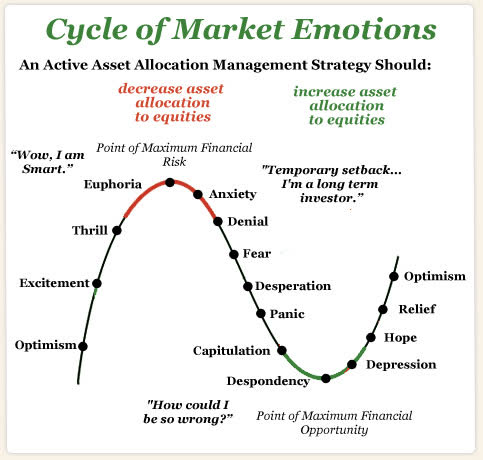
People feel comfortable and a false sense of safely in numbers. Speculative bubbles feed on themselves because investors grow more and more optimistic as prices rise. Investors who rely on past performance become overly optimistic about high flyers and over pessimistic about laggards that may be a good value.


Investors should look for warning signs (see: “How to Avoid Investment Bubbles” http://tinyurl.com/ylcltne) of overvalued assets and stay disciplined in their investment purchases. The often printed warning “past performance is no indication of future returns” should not be ignored.


→ 2 CommentsTags: ·····

Three Needed Health Care Reforms

February 24th, 2010 · Economics, General Advice

When health care is free (i.e. single payer systems) or is hidden (current system) the demand creates shortages that cause rationing decided by the payer (government or insurance company). Reforms that encourage greater competition, personal accountability and choice, preventive maintenance, greater transparency of costs, tort reform, and tax fairness would greatly improve the best and most innovative health care system in the world. Here are three reforms that would go a long way in improving our health care system.


Tort Reform would make changes in the way claims are filed against health care providers.  Frivolous lawsuits and high damage awards relative to actual damages are driving health care costs up directly and indirectly. The direct costs of high insurance premiums are driving up the costs of care, and driving health care providers out of business; particularly reducing the number of doctors.  The indirect costs of unneeded tests and procedures in order to avoid potential litigation carry costs many times the direct costs.


Intra- State Competition among the insurance companies would provide much greater choice and lower costs.  Congress restricts purchase of insurance policies to individual states; creating near monopolies for some insurance companies. This is especially true in the less populous states. If insurance companies competed across the entire nation consumers would have dozens or even hundreds of choices and competition would help drive down costs and expand choices.


Equitable Tax Policies for individuals purchasing health insurance would even the playing field.  Businesses that provide health care get a tax deduction for the expense.  Giving individuals the same benefit would further promote accessibility and fairness, as well as boost portability. Tax fairness will lower cost and eliminate the lack of fairness that creates uncertainty in the current market.  Individual and Corporate plans would be treated equal and make health care insurance more affordable and fair for individuals and small businesses.


→ 1 CommentTags: ····

Are Your Returns Suffering From Over Diversification?

February 22nd, 2010 · AIP Money Management Tips, Portfolio Management

AIP Money Management Tip


Over diversification is a serious mistake made by many investors. Some investors have learned the harmful effects of under diversification and mistakenly believe that the more diversification the better. It has become common to diversify to the point of hurting your investment returns. This is particularly harmful in the current environment where the market averages have provided a negative rate of return over the past decade. Too many stocks in a portfolio results in a portfolio behaving similar to market averages.


Most portfolio analysts believe that somewhere between 15 and 30 different assets is optimal to properly diversify away company specific and industry risk. Most institutional vehicles (i.e. diversified mutual funds, pension funds, etc.) are over diversified and simultaneously lack an asset allocation needed for success in today’s challenging market. Many investors have experienced the poor results of over diversification during the past decade.


A properly asset allocated portfolio with optimum diversification requires expertise and excellent research.  The Arbor Investment Planner provides the individual investor with the critical information which allows him or her to properly diversify and assemble an asset allocated portfolio.


More Information Available at: www.ArborInvestmentPlanner.com


→ 1 CommentTags: ·····